
Bread guide
Burger bun brioche: how to choose yours
Most guides on brioche bread are written for making it at home. This one is not. This one is written by the factory that bakes it every day for burger restaurants, and it is about what a professional really asks: what diameter your patty calls for, how much each bun weighs, how long it keeps and why some fall apart with the sauce and others do not.
What exactly is a brioche bun?
Brioche is a bread that is enriched: besides flour, water, yeast and salt it contains egg and butter. That fat is what changes everything. It makes the crumb more tender and elastic, gives the crust its golden colour and that milky, slightly sweet flavour that to no one tastes like "bread on the side".
In a burger it matters for one very specific reason: the fat in the dough slows the entry of the juice. A normal bun soaks up the sauce like a sponge and breaks after two bites; an enriched one holds it for as long as the dish lasts. That is why it took hold in the quality burger and not the other way round.
The other reason is mechanical. An elastic crumb can be press and spring back: you can press the burger to eat it without the top cracking. A dry crumb splits where you press it. On a menu, that is the difference between a dish you eat cleanly and one the customer remembers for the napkin.
Difference between the POTATO and SUPREME brioche bun
Briox works with two doughs, and they are not chosen by preference: they are chosen by what goes inside the burger.
The POTATO is the house classic: potato starch and butter, with a very tender crumb. It is the industry standard.
The SUPREME has butter too, but its dough is less enriched and less brioche-like: lighter in the mouth and the least sweet in the whole range. Neutral in flavour and colour, it is the closest to the traditional burger bun — the one you choose so that the meat leads. It is the one you choose when you don't want the bun to speak louder than the meat.
| Word | What it means |
|---|---|
| POTATO | Potato starch and butter. The most tender crumb, and the industry standard. |
| SUPREME | A less enriched, less brioche-like dough: lighter in the mouth and the least sweet. Neutral flavour and colour. |
| AIR | Longer fermentation: the crumb comes out airier and lighter. |
| HIGH | Same weight, more height: the bun rises instead of spreading out, and leaves room for more filling without the burger falling apart. |
The names read like a formula: a HIGH POTATO AIR is a bun that is tall, with classic dough with butter y long fermentation. Once you know the four words, you know what is inside any reference without looking at the spec sheet.
Brioche bun for smash: why the POTATO SMASH is square
The POTATO ROLL AIR and the POTATO SMASH use practically the same dough. What changes is how they come out of the oven.
The roll is baked loose and comes out round. The smash is baked on a tray, with the buns joined together: when you separate them the edge is straighter, almost square. It is exactly the shape that suits a wide, pressed patty: the straight edge hugs the outline of the smash instead of letting it stick out.
Brioche bun with sesame or poppy seed
The plain SUPREME comes in 80 g. With sesame or poppy seed it goes up to 95 g. The two seeded formats are the SÉSAMO 95 and the AMAPOLA 95. The seed is not just for looks: sesame brings an extra toasted note that suits a smash very well.
What the POTATO AIR is
The POTATO AIR is on exclusive launch. Longer fermentation: a more balanced bun, a subtler butter flavour and a cloud-like texture. If you want the bun to accompany without being heavy, this is the one.
What bun diameter do I need?
It is the most repeated question and almost nobody answers it with numbers. The golden rule is simple: the bun and the meat are measured the same. A patty shrinks by between 10% and 20% when cooked, so you choose the bun by the diameter the patty will have once cooked, not by that of the raw ball.
If the bun is smaller than the patty, the edge sticks out, it drips and it eats badly. If it is much bigger, the first bite is bread alone — and the customer notices it before any critic does.
| Type | Meat | Bun | Bun weight |
|---|---|---|---|
| Slider / bite | 40–60 g | 4–5 cm | 30 g |
| Smash | 90–120 g | 10 cm | 80 g |
| Classic | 120–160 g | 10–11 cm | 80–95 g |
| Double / large | 180–250 g | 11–12 cm | 95–100 g |
Once that is done, the rest is choosing height: a low bun for a smash, a tall one when there is a double patty, cheese and sauce to hold.
Which burger bun do I need for my patty?
Tell us what your burger is like and we will tell you what diameter it calls for and which references measure that. It is the same rule from the table above, solved for you.
Briox's buns, compared
This table is the whole catalogue on one screen: each bun with its weight, its diameter and what it is meant for. The buns with two formats appear with both in the same row. Clicking on the name opens its data sheet, with the photos and the detail.
| Bun | Format | What for | Order |
|---|---|---|---|
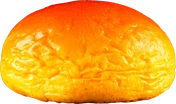 POTATO ROLL AIR POTATO ROLL AIR | 80 g / 10 cm | Tall burger | Order |
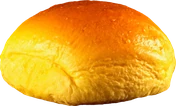 POTATO SMASH POTATO SMASH | 80 g / 10 cm | Smash burger | Order |
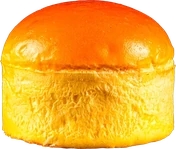 HIGH POTATO AIR HIGH POTATO AIR | 80 g / 10 cm | Tall burger | Order |
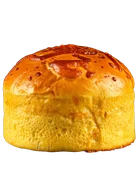 HIGH CHEESE HIGH CHEESE | 80 g / 10 cm | Classic burger | Order |
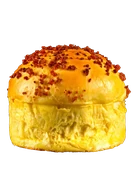 HIGH BACON HIGH BACON | 80 g / 10 cm | Classic burger | Order |
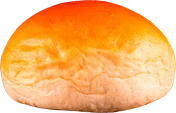 SUPREME 80 SUPREME 80 | 80 g / 10 cm | Classic burger | Order |
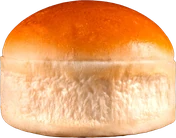 HIGH SUPREME AIR HIGH SUPREME AIR | 80 g / 10 cm | Tall burger | Order |
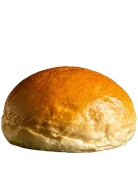 VEGAN VEGAN | 80 g / 10 cm | Vegan menu | Order |
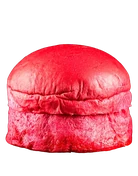 HIGH PINK HIGH PINK | 80 g / 10 cm | Classic burger | Order |
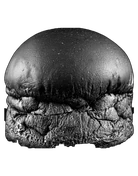 HIGH BLACK HIGH BLACK | 80 g / 10 cm | Classic burger | Order |
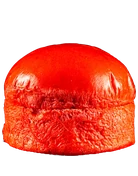 HIGH RED HIGH RED | 80 g / 10 cm | Classic burger | Order |
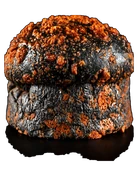 HIGH BLACK LOTUS HIGH BLACK LOTUS | 80 g / 10 cm | Classic burger | Order |
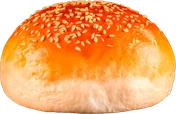 SÉSAMO 95 SÉSAMO 95 | 95 g / 11 cm | Double and large burger | Order |
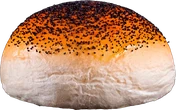 AMAPOLA 95 AMAPOLA 95 | 95 g / 11 cm | Double and large burger | Order |
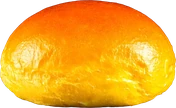 POTATO 100 POTATO 100 | 100 g / 12 cm | Double and large burger | Order |
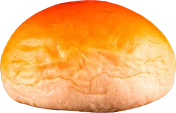 SUPREME 100 SUPREME 100 | 100 g / 12 cm | Double and large burger | Order |
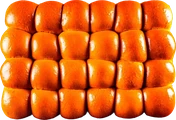 SLIDERS SLIDERS | 720 g / 4 sheets | Sliders and bites | Order |
All are served already sliced from the factory, so they arrive ready for the griddle without going near a knife in the kitchen.
Do you ask ChatGPT which bun suits you?
Give it the whole range in one file and it will answer with the exact data, not with what it infers from reading the website.
How long does it last and how is it stored?
Briox brioche is served frozen, which is how an enriched bread with no preservatives is really kept: the cold stops the clock the day it comes out of the oven.
6 months is how long it keeps frozen at −18 °C. Out of the freezer, 15 days in its flowpack packaging at room temperature.
The buns come in bags of 4 (the HIGH, of 6), so you take out of the freezer only the bag you are going to use in the service and the rest of the box stays intact. It is the difference between throwing away bread every week and throwing away none. We tell it in full in the frozen bread guide.
Why does one bun fall apart and another does not?
The sauce almost always gets the blame, and it is almost never the sauce. It is three things:
- The fat in the dough. A real brioche has enough butter and egg for the crumb to repel the juices for a few minutes. A "brioche-style" one with little fat gets soggy just like sliced bread.
- The crown. If the top crust is thin and firm, it holds; if it is soft and spongy, it splits down the middle right when you press.
- The toasting. Thirty seconds on the griddle on the cut side seal the crumb and create a barrier. It is the step that gets skipped the most and the one that shows the most.
With all three, a bun holds a double-patty burger with sauce without giving in. Without them, no bun will do.
Quick questions
How much does a burger bun weigh?
It depends on the size of the burger. At Briox they range from 80 g a 100 g, and the most common one on a menu is the 80 g. The SLIDERS are a separate case: they are served in sheets and each bite is quite a bit smaller.
Is brioche sweet?
It has some sugar, but much less than a pastry. Just enough for the crust to brown well and for that milky background to come through. In the mouth it does not compete with the meat: it goes with it.
Does it work for a vegan burger?
Classic brioche has egg and butter. For a vegan menu there is the VEGAN, made without ingredients of animal origin and in the same format as the classic one.
Can you order a size that is not on the list?
Yes. That is the advantage of producing with artisan processes rather than an industrial line: the mould does not rule. If your meat calls for a particular diameter, we can talk.
Shall we tell you which one is yours?
Tell us the weight of your patty and how many burgers you serve a week. We tell you which bun fits and send it to you to try.